Calm Parenting Toolkit: Help Kids Feel Safe & Resilient
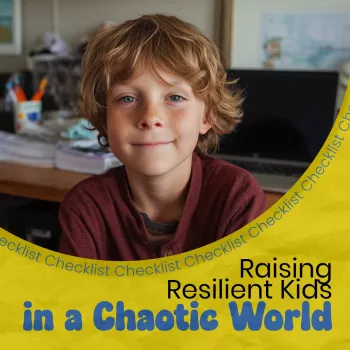
When the world feels unpredictable, children look to adults for cues about safety, stability, and how to handle big feelings. Resilience doesn’t mean ignoring fear or forcing “toughness”—it means building steady routines, supportive relationships, and practical coping skills that help kids recover after stress. Below is a calm parenting toolkit with simple, realistic steps to use daily, plus a printable checklist you can turn into repeatable weekly habits.
What “feeling safe” means for kids (and why it’s the foundation of resilience)
For kids, safety isn’t only about physical protection—it’s also about emotional safety: consistent care, predictable boundaries, and adults who stay steady during hard moments. When a child can trust that caregivers will remain present and regulated, the child’s nervous system learns, “Big feelings are survivable.”
Kids also tend to communicate stress through behavior more than words. You might see irritability, clinginess, sleep changes, headaches or stomachaches, or more conflict at home. These are often signs that the child’s body is “on alert,” even if they can’t explain why.
Resilience grows best when children consistently experience three things: (1) a secure relationship, (2) manageable challenges, and (3) support to return to calm after being upset. The goal isn’t a perfectly peaceful house—it’s a home where feelings are allowed and recovery is practiced.
Start with co-regulation: the fastest path from chaos to calm
Co-regulation means lending your calm to your child until they can access their own. It often works faster than reasoning, lecturing, or consequences in the middle of a meltdown.
- Name what’s happening without escalating it: “Your body looks worried. I’m here.”
- Use a calm, confident tone with short sentences, and slow your breathing (kids borrow nervous-system cues from caregivers).
- Use a repeatable calm-down sequence: pause → breathe → connect → problem-solve.
- Hold limits while staying warm: “It’s okay to be upset. It’s not okay to hit. I’ll help you.”
Quick co-regulation scripts for common moments
| Situation | What to say | What to do |
|---|---|---|
| Nighttime fears | “You’re safe. I’ll check the room with you, then we’ll do our calm steps.” | Brief room check, dim light, 3 slow breaths, short reassurance, return to bed routine |
| After scary news | “That sounded scary. What questions do you have?” | Ask what they heard, correct gently, limit details, offer a grounding activity |
| Angry outburst | “I won’t let you hurt anyone. I’m right here.” | Move to safety, keep voice low, offer a squeeze pillow or stomp break, reconnect after |
Predictability is protection: build routines that reduce anxiety
When life feels chaotic, routines become “anchor points” that tell a child the day is knowable. Keep a few core moments stable—wake-up, meals, school drop-off, bedtime—even if everything else shifts.
- Use simple visual cues: a 3-step morning chart, bedtime checklist, or a weekly rhythm board.
- Plan transitions: give a 5-minute warning, name the next step, and offer one small choice (“Do you want to hop or tiptoe to the car?”).
- Repair after disruptions: narrate what changed and what stays the same (“Dinner is later, but bedtime story still happens.”).
Help kids make sense of an unsafe world without overwhelming them
Kids don’t need every detail—they need clarity, emotional permission, and reassurance that capable adults are handling safety. Start with what your child already knows and build from there.
- Ask what they heard, what they think it means, and how it made them feel.
- Offer truthful, age-appropriate explanations; avoid graphic detail and repeated exposure to disturbing content.
- Separate “rare and scary” from “likely and manageable,” emphasizing what adults do to keep people safe.
- Teach a simple plan for worry: notice → name → choose a coping tool → return to a normal activity.
For more guidance on children’s emotional wellness and anxiety, visit American Academy of Pediatrics (HealthyChildren.org). General family stress-coping tools are also available from the CDC and the APA.
Teach coping skills that work in the moment (not just in theory)
Connection habits that strengthen resilience over time
Printable checklist: turn calm parenting tools into a weekly rhythm
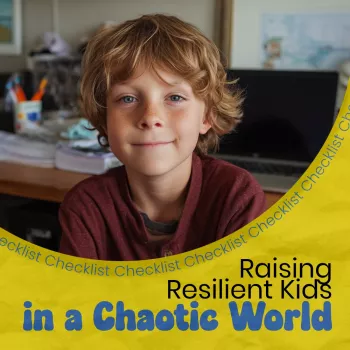
If you want a ready-to-print system you can keep on the fridge or save to your phone, see: Printable checklist guide: Raising Resilient Kids in a Chaotic World.
Weekly resilience check-in (sample categories to track)
| Category | Goal for the week | Simple indicator it helped |
|---|---|---|
| Predictability | Keep bedtime steps consistent 5 nights | Fewer delays, quicker settling |
| Connection | 10 minutes of child-led play 4 days | More cooperation, fewer power struggles |
| Coping skills | Practice one calming tool daily when calm | Uses tool sooner during stress |
| Media & worries | Limit scary content; do one Q&A talk | Fewer intrusive questions, improved sleep |
Helpful products to support calm routines
- Raising Resilient Kids in a Chaotic World – Printable Checklist Guide for Parents | Calm Parenting Toolkit (simple weekly rhythm, co-regulation reminders, and trackable habits)
- Interactive Rubber Basketball Dog Toy (a quick movement break with a pet can help some kids downshift before reconnecting)
When extra support is needed
FAQ
How can a parent help a child feel safe when the news is scary?
Ask what your child heard and how it made them feel, then correct misinformation gently with minimal details. Emphasize “helpers,” your family’s specific safety routines, and limit repeated exposure to distressing media.
What are quick calming techniques that work for kids during a meltdown?
Start with co-regulation: calm voice, closeness, and short phrases that communicate safety. Then offer one simple body-based tool—slow breathing, five-senses grounding, squeezing a pillow, or a brief movement break—and save problem-solving for after calm returns.
What if my child’s anxiety is getting worse even with routines and coping skills?
Look for persistence and impairment (sleep, school, friendships), not just occasional tough days. If symptoms last for weeks, intensify, or follow trauma exposure, consult a pediatrician or a licensed mental health professional for next steps.










Leave a comment